CULTURE & HISTORY · November 6, 2026 · Ayat Quranayh Team
Arabic calligraphy and the Quran: Kufic, Naskh and Thuluth
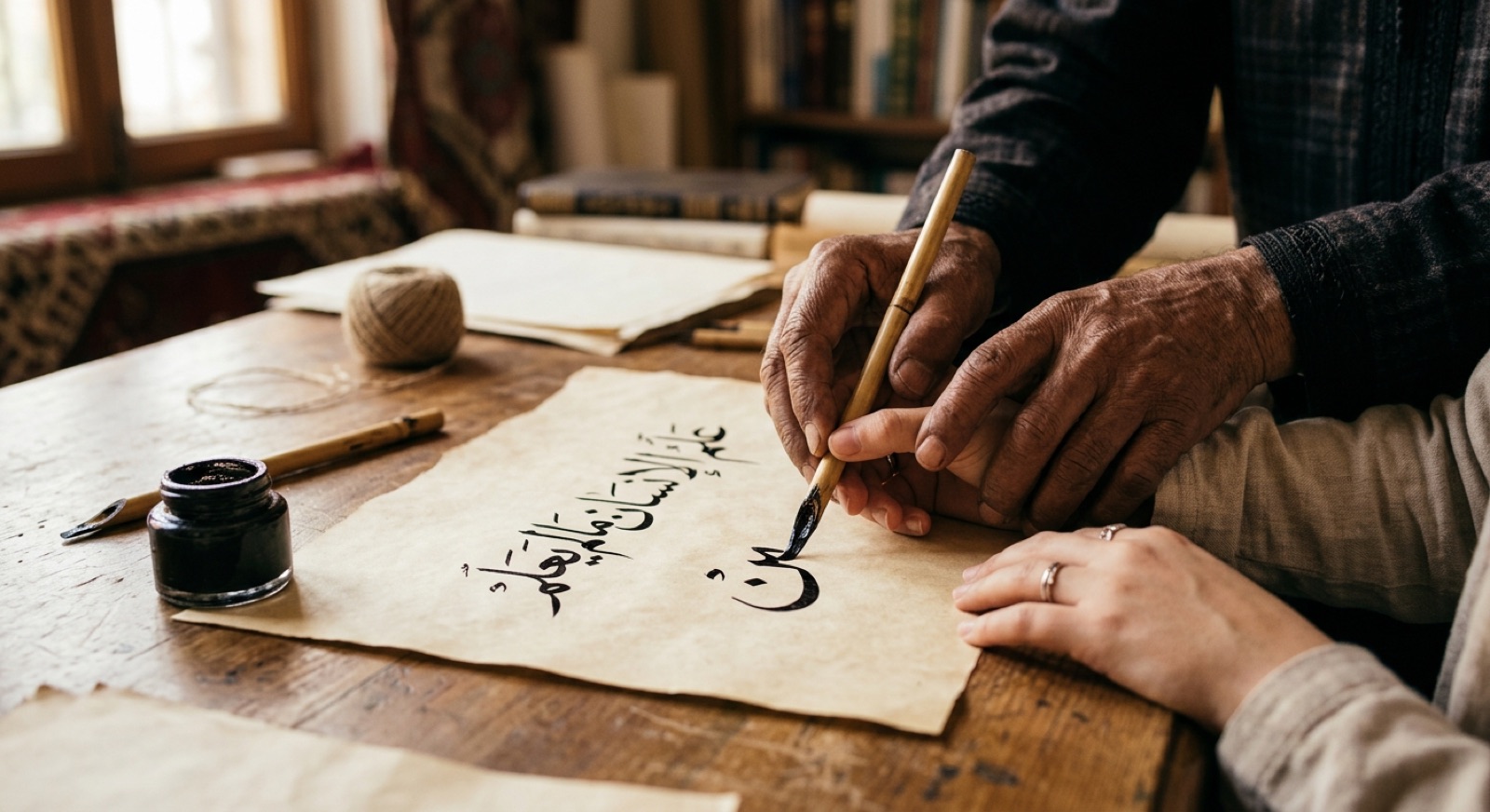
Calligraphy (khatt) is the art most closely tied to the Quran. For centuries, copying the Quran by hand was both an act of worship and a skilled craft, and the scripts that grew from it still shape how Arabic looks today.
Kufic
Kufic is an early, angular script with strong horizontal lines. Many of the oldest Quran manuscripts are written in it, often on wide pages. Later it became a favourite for decoration and for inscriptions on buildings.
Naskh
Naskh is rounded, clear and easy to read. Scholars such as Ibn Muqla (died 940 CE) set out rules of proportion for it, and Ibn al-Bawwab (died 1022 CE) refined it. It became the standard script for copying the Quran, and printed copies of the Quran today are still in a Naskh style.
Thuluth
Thuluth is large and flowing. It is used for surah titles in Qurans and for the bands of writing you see on mosque walls and domes.
What this means for a learner
Printed Qurans differ in their script and spelling conventions. Some, such as those used in North and West Africa, follow a different recitation than the one most widely printed elsewhere. A teacher can tell you which one you are holding, so that your recitation and your book agree.
اقْرَأْ وَرَبُّكَ الْأَكْرَمُ ﴿٣﴾ الَّذِي عَلَّمَ بِالْقَلَمِ “Recite, and your Lord is the Most Generous, who taught by the pen.” (Al-Alaq 96:3–4)
Inspired by this article?
Get customized feedback by scheduling a complimentary session with us.
Book complimentary session